
De-Motivate
What if you just give up?

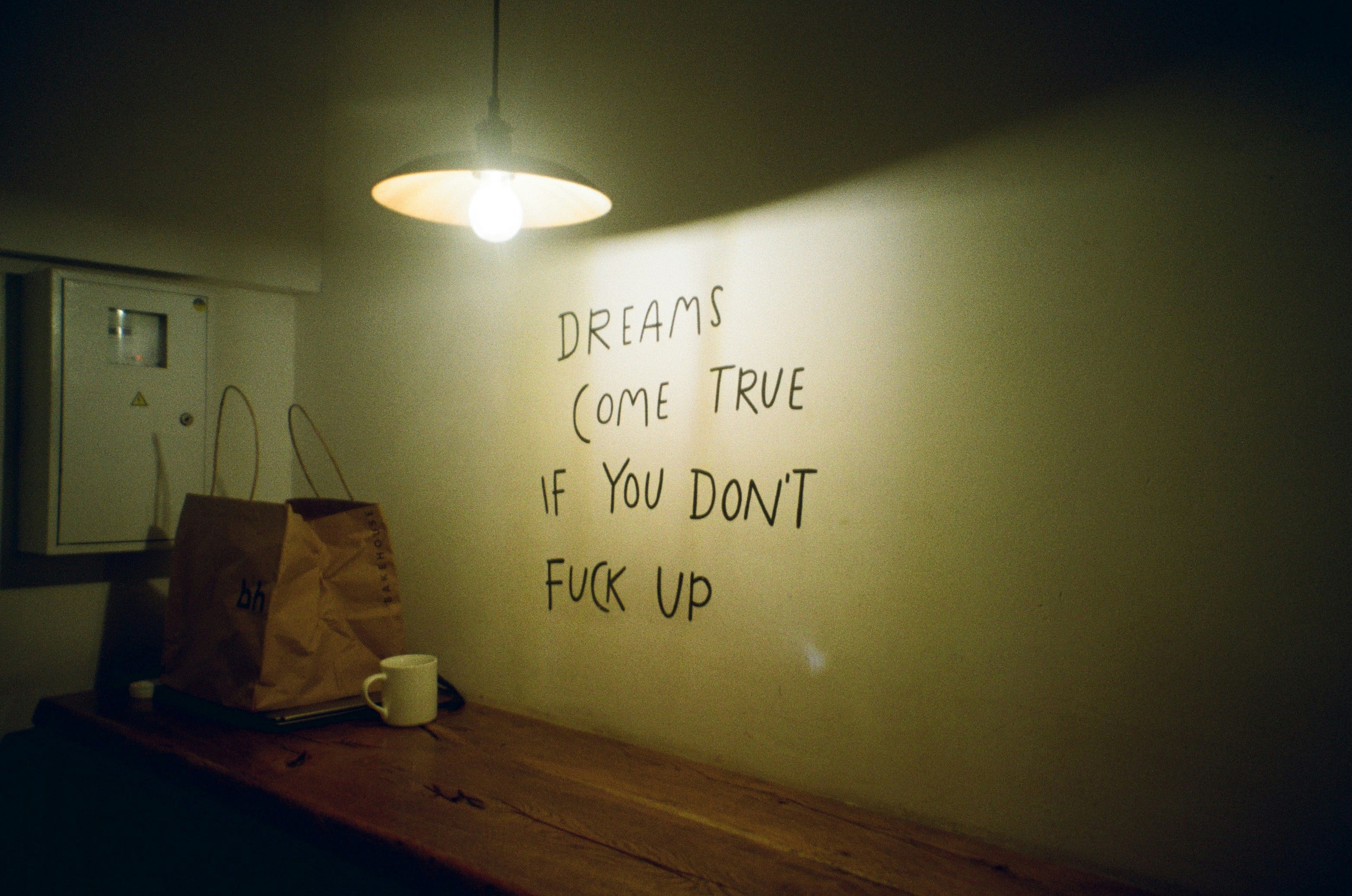
A funny thing about leadership is that it actually seems be almost exactly the opposite to being a boss. I have learned this lesson as a ‘leader’ and as an employee/report and even in organizations that purport to be flat. Coming in with an agenda can invite immediate dissent. Getting people to do what you want nearly always comes at a cost, even if it seems to work in the short term.
Leadership emanates from people who are not trying to get you to do what they want, but are clear about their own direction and are willing to help people to go in that direction. Leadership fails when there’s someone who thinks they know what you should do and how you should do it and can threaten you for not complying with their agenda.
Actual leadership can come from all kinds of people. It doesn’t require any particular role. It’s often a big problem in organizations where there’s a so-called leader bossing people about and a real leader earning respect. Weirdly, the latter is rarely trying to motivate other people, and yet they often are catalysts within the team.
Can you motivate people?
There are countless strategies and HR trainings aimed at helping people to motivate others. There are compensation plans and PIPs and bonuses and awards and prizes and warnings. There are podcasts and books and programs and coaches.
Whenever there’s this level of confluence around something aspirational, you can bet that 99% of it is garbage, like get rich quick schemes or cellulite treatments.
“Motivating people doesn’t work because you cannot force someone to feel a sense of relatedness. But as a leader, you can encourage relatedness by challenging beliefs and practices that undermine people’s relatedness at work. That means paying attention to how your people feel. That means gaining the skill to deal with their emotions. That means getting personal.” ― Susan Fowler, Why Motivating People Doesn’t Work . . . and What Does
Motivation comes from alignment with one’s own desires and values, clarity about a path forward, and ideally, some latitude for failure. These are conditions it’s possible to develop on a team, but it’s not the same thing at all as “motivating” someone to do what you want.
If you lack motivation, question your motives
You know that feeling of getting things done where it feels like your brain feels like some warp speed Tetris game and you are like “holy moly I am alive!” and you’re just blazing through your tasks? (OK, maybe no one actually says ‘holy moly’ but you get what I am saying?)
That flow state is not a product of motivation. It’s a result of starting, doing something challenging but not hard, and not getting interrupted.
Weirdly, nearly everything about work seems to operate in direct opposition to flow. Emails, Slack, meetings, exhaustion, unclear connection to any meaning, boring activities that it would be no surprise to find AI can do... How did we get here?
In his book Bullshit Jobs, David Graeber noted, ““We have become a civilization based on work—not even “productive work” but work as an end and meaning in itself.”
It’s why I often find it maddening that we focus on the idea of AI taking our jobs, almost as an echo of the idea of “immigrants” taking jobs. It’s an attachment to a kind of labour that was always one step away from servitude, the kind of work that required others to “motivate” people to do, by dangling incentives or by the lash.
Meanwhile, we wrestle with the elusive “self-motivation.” Why aren’t we all writing novels or getting a six-pack, or operating side hustles? There’s no shortage of frameworks and coaches promising to help.
Could it be that we actually do not want to do those things, as beneficial as they sound? Or even that in our hearts, we know that none of these things will save us from loneliness and ultimately, our own demise?
What if our lack of motivation is simply a sign that what we’re doing isn’t really joyful? Or at least compelling?
But wait, what about writer’s block?
Creative work flows when we’re not mired in judgment, fear of judgment, or misaligned motives. Most great art is a result of compulsion and obsessiveness more than it is from motivation. It’s when you can’t stop, even though some parts are painful or feel like toil.
There are many people who report feeling stuck when they want to do creative work. I have felt that way myself, and I have believed things like, “I must be afraid of success.” But now I see it’s not success I fear but freedom.
It’s very hard to let go of the idea of being important. It’s hard to believe that the success we’re offered won’t make things better because at least then we can buy stuff or go on vacations or impress other people. Creative work has become an avenue of this kind of achievement, oddly, but it’s a blip. It’s almost as though we had to commodify creative work so that we could get to plan B: AI replacement.
Freedom comes with the understanding of our own responsibility. That we could choose to believe something other than “we must succeed.” That in fact, a taste of freedom has more meaning than a decade of “success” on the terms we’re offered.
If motivation is required, maybe it’s because we need to question our motives, or the motives of whatever we’re being motivated to do.
Interesting Jobs
Digital Impact Alliance Manager, Products & Practices
Vitala Global North America Lead (Programs & Partnerships)
Climatebase Product Designer (UI/UX)
Overstory Senior Product Manager
Isometric Senior Product Designer
QuantumScape Senior Product Manager
Crusoe Product Design Intern, Summer 2026
Engaging Networks Head of Product
Run for Something Senior Technical Lead
Movement Labs Senior Data Scientist
Pew Research Labs Head of Product Management